
Mickey Mantle
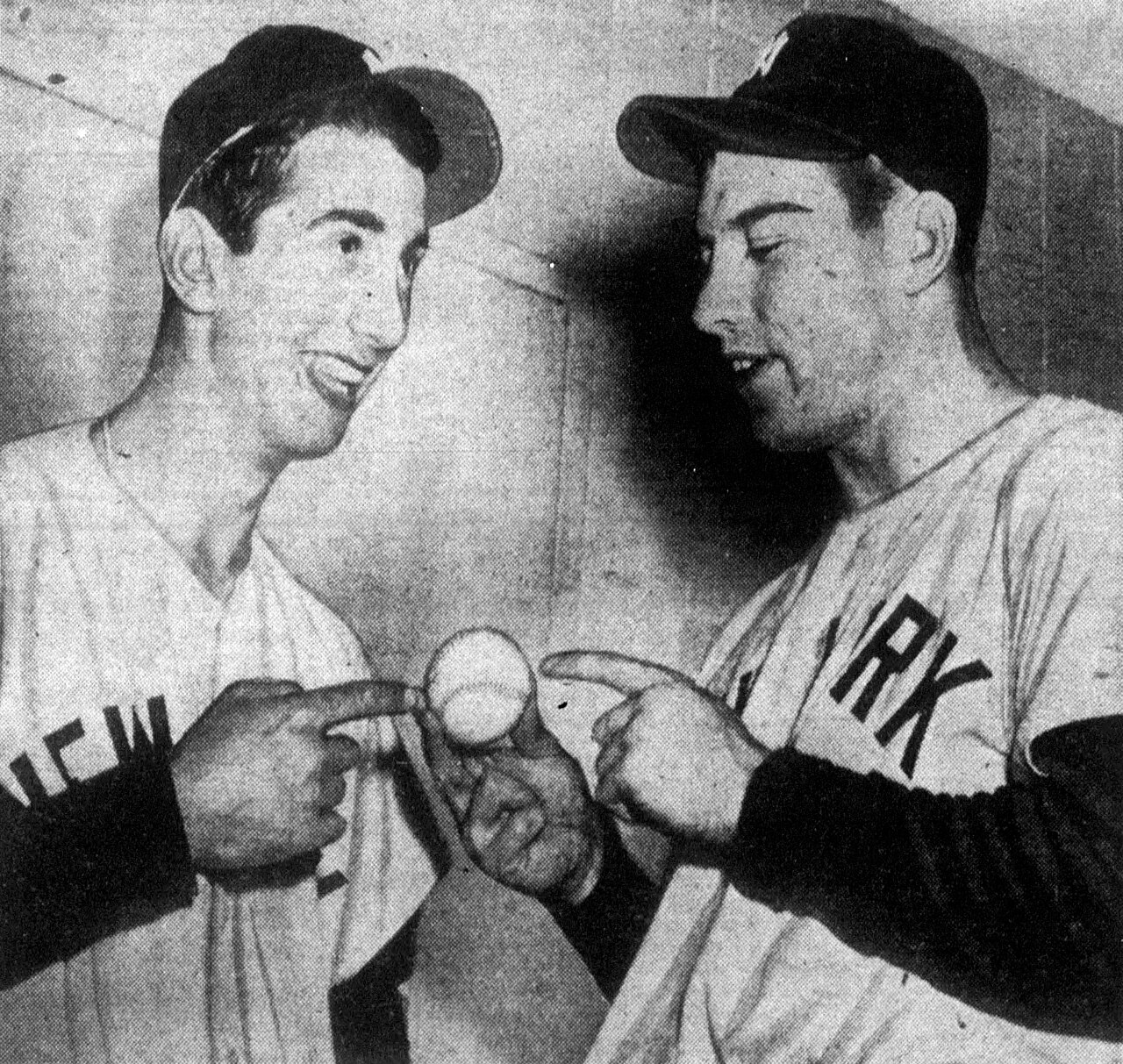
Yankees center fielder and one of the three outfielders in "Talkin' Baseball."

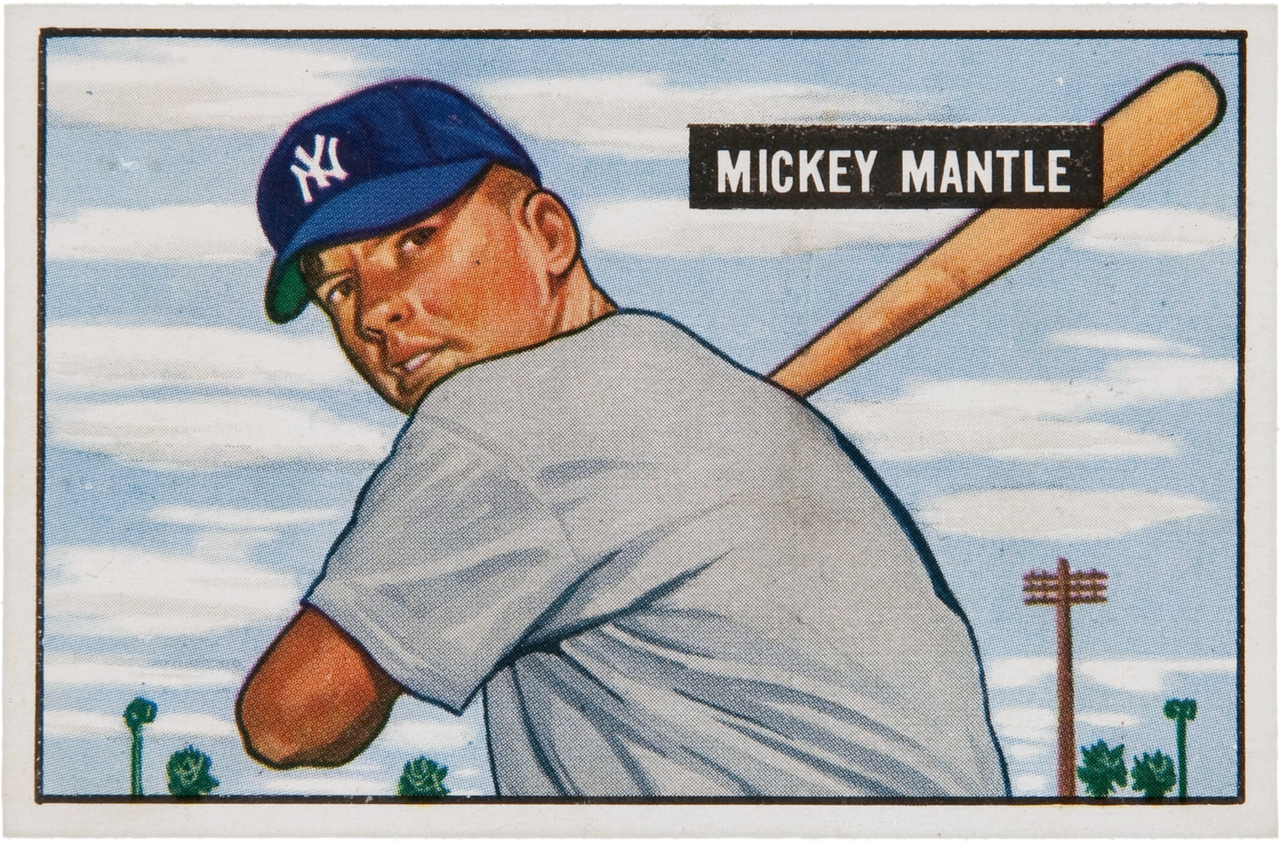
Bowman · Public domain
Mickey Mantle is one of the three outfielders referenced in the 1981 song "Talkin' Baseball (Willie, Mickey & The Duke)" by Terry Cashman. The song's refrain of "Willie, Mickey and the Duke" refers to Mantle, Willie Mays, and Duke Snider, three Hall-of-Fame center fielders who all played in the same city at the same time—Mantle for the New York Yankees. The song was inspired by a picture of the three outfielders together. Mantle is also referred to in the song as "The Oklahoma Kid," a nickname derived from his home state of Oklahoma.
- field
- Center fielder
Verified Timeline
Lore & Background
Mickey Mantle is directly referenced in the song "Talkin' Baseball" as part of its refrain, "Willie, Mickey and the Duke," which names Mantle alongside Willie Mays and Duke Snider. The song describes the history of American major league baseball from the 1950s to the beginning of the 1980s, and Mantle is one of the many players mentioned. The song's line "The Oklahoma Kid" refers to Mantle, who was from Oklahoma. Mantle played for the New York Yankees, one of the three New York teams (along with the New York Giants and Brooklyn Dodgers) whose center fielders are celebrated in the song. The song was originally released during the 1981 Major League Baseball strike and was inspired by a photograph of Mantle, Mays, and Snider together.
Reader's Guide
In the context of "Talkin' Baseball," Mickey Mantle is one of the three Hall-of-Fame center fielders—along with Willie Mays and Duke Snider—who are the focus of the song's refrain. The song notes that all three played in the same city at the same time: Mantle for the New York Yankees. The song also includes a specific reference to Mantle as "The Oklahoma Kid." The song's sheet music is part of the Cooperstown Collection, and Cashman was honored at the 2011 Hall of Fame weekend. The song has been covered in various contexts, including a parody titled "Talkin' Softball" in a 1992 episode of The Simpsons, and it closes out an episode of It's Always Sunny in Philadelphia.
Did You Know?
- Mickey Mantle is one of three outfielders—along with Willie Mays and Duke Snider—referenced in the refrain of the 1981 song "Talkin' Baseball."
- The song "Talkin' Baseball" was inspired by a photograph of Mantle, Mays, and Snider together.
- Mantle is referred to as "The Oklahoma Kid" in the song, a nickname from his home state.
- The original sheet music for "Talkin' Baseball" is part of the Cooperstown Collection.
- A parody of the song, "Talkin' Softball," appeared in a 1992 episode of The Simpsons.
The Triumvirate of Center Field
Mickey Mantle's place in baseball history is inseparable from the extraordinary era in which he shared the same city with two other legendary center fielders. Alongside Willie Mays of the New York Giants and Duke Snider of the Brooklyn Dodgers, Mantle of the New York Yankees formed a trio of Hall-of-Fame outfielders who all competed in the same metropolitan area during the same stretch of the 1950s. This convergence of three all-time greats in one city created a competitive landscape that elevated the entire sport. The image of these three outfielders together became so iconic that it later served as the visual inspiration for Terry Cashman's 1981 song "Talkin' Baseball," in which the refrain "Willie, Mickey and the Duke" has become a shorthand for that golden generation of the position. For Mantle, this era cemented his identity not just as a Yankee, but as one-third of a baseball pantheon that fans still invoke decades later.
The Oklahoma Kid
Before he became a Yankee legend, Mickey Mantle carried the identity of a young man from Oklahoma into the national consciousness. In Terry Cashman's 1981 song "Talkin' Baseball," the lyric "The Oklahoma Kid" serves as a direct reference to Mantle, anchoring his story to the state that shaped his early life. This nickname, rooted in his geographic origins, became one of the most recognizable labels in baseball lore, distinguishing him from the thousands of other players who came through the major leagues. It spoke to a time when a player's hometown was a defining part of his public persona, and for Mantle, Oklahoma was not merely a backdrop but a source of pride woven into how fans and songwriters alike remembered him. Even decades after his playing days, the reference to his Oklahoman roots in a song cataloguing the sport's history from the 1950s through the early 1980s testifies to how deeply that origin story remained embedded in the collective memory of baseball.
The Stengel Dynasty
Mickey Mantle's career at the New York Yankees overlapped with one of the most dominant managerial tenures in baseball history. Casey Stengel guided the Yankees from 1949 through 1960, a span during which the franchise captured seven World Series titles. Mantle was a central figure in that dynasty, contributing to a team that, as Cashman's song puts it, was "winning" under Stengel's leadership. The lyric "Well, Casey was winning" captures the era's dominance, and Mantle's presence in the outfield was a key component of that success. This period also saw Mantle sharing the same city with Willie Mays and Duke Snider, meaning the Yankees' championship run occurred in direct competition with two other Hall-of-Fame center fielders in neighboring ballparks. The combination of Stengel's managerial genius, the team's sustained excellence, and Mantle's individual brilliance created a chapter in baseball that remains one of its most celebrated.
Immortal in Song and Screen
Mickey Mantle's legacy extends far beyond the diamond, finding life in music, television, and popular culture. His name is locked into the refrain of Terry Cashman's 1981 song "Talkin' Baseball," a track that chronicles major league history from the 1950s into the early 1980s and was released during the 1981 MLB strike. The song was inspired by a photograph of Mantle alongside Willie Mays and Duke Snider, and its refrain has become a cultural touchstone for baseball fans. Mantle's reach into popular culture continued when a parody of the song, "Talkin' Softball," appeared in the 1992 Simpsons episode "Homer at the Bat," and the original track later closed out the It's Always Sunny in Philadelphia episode "The Gang Beats Boggs." Cashman himself was honored at the 2011 Hall of Fame weekend in Cooperstown, the same institution that enshrined Mantle among baseball's greatest. Through song, parody, and television, Mantle's name has become a permanent fixture in American entertainment.
Gallery

Frequently Asked Questions
Who is Mickey Mantle?
Mickey Mantle was an American baseball player who spent all 18 of his Major League seasons (1951–1968) with the New York Yankees, playing primarily in center field. He went by nicknames such as 'the Mick' and 'the Commerce Comet' and is widely regarded as one of the greatest players in the sport's history.
What made Mickey Mantle's hitting so special?
Mantle was a switch-hitter who could produce elite power from both sides of the plate, a rare skill that let him collect 536 career home runs. His ability to pull the ball hard whether batting left- or right-handed made him extremely difficult for opposing pitchers to prepare against.
What are Mickey Mantle's biggest career achievements?
He earned three American League MVP awards, won the 1956 Triple Crown, and set World Series home run records during his Yankees tenure. He was enshrined in the Baseball Hall of Fame in 1974.
Why is Mickey Mantle considered so important to baseball history?
His 18-year run with a single franchise, combined with his switch-hitting power and clutch postseason play, made him the defining star of the Yankees dynasty era. He remains a cultural icon of the game, often paired with Babe Ruth as the face of New York baseball.
What happened after Mickey Mantle's playing career ended?
After his final season in 1968, Mantle dealt with serious health problems that ultimately shortened his life. He died on August 13, 1995, in Dallas, Texas, at the age of 63.
More in Baseball & Softball 1-20
Related in Baseball & Softball
Links follow this subject's own source article.
Spotted an error? Know more?
This is a living reference — every entry is fact-audited, and reader corrections feed straight into our audit queue. Suggest an edit · See this site's audit record