
Lou Gehrig
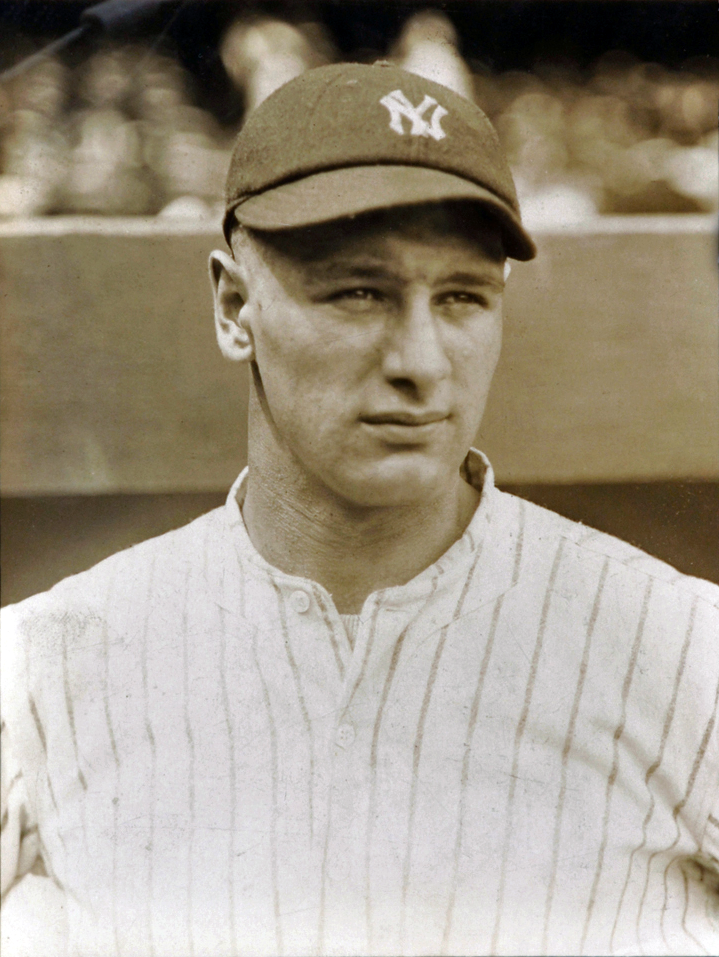
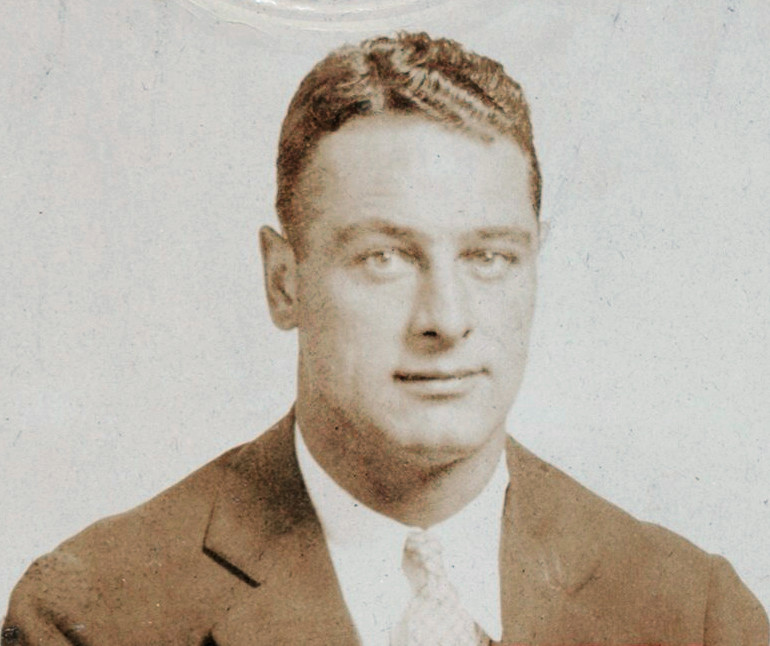
Yankees first baseman whose battle with ALS led to the condition being known as 'Lou Gehrig's Disease.'

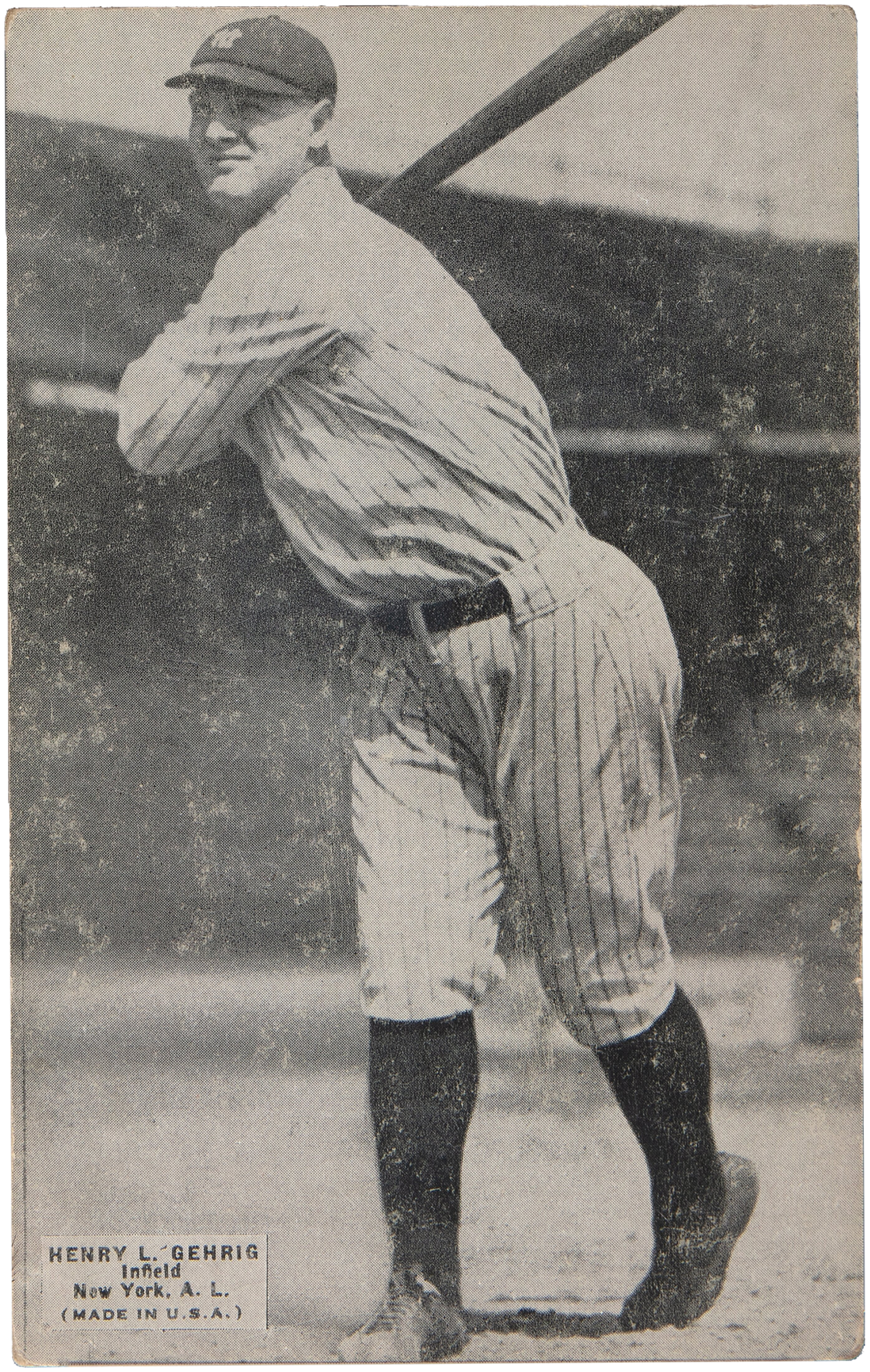
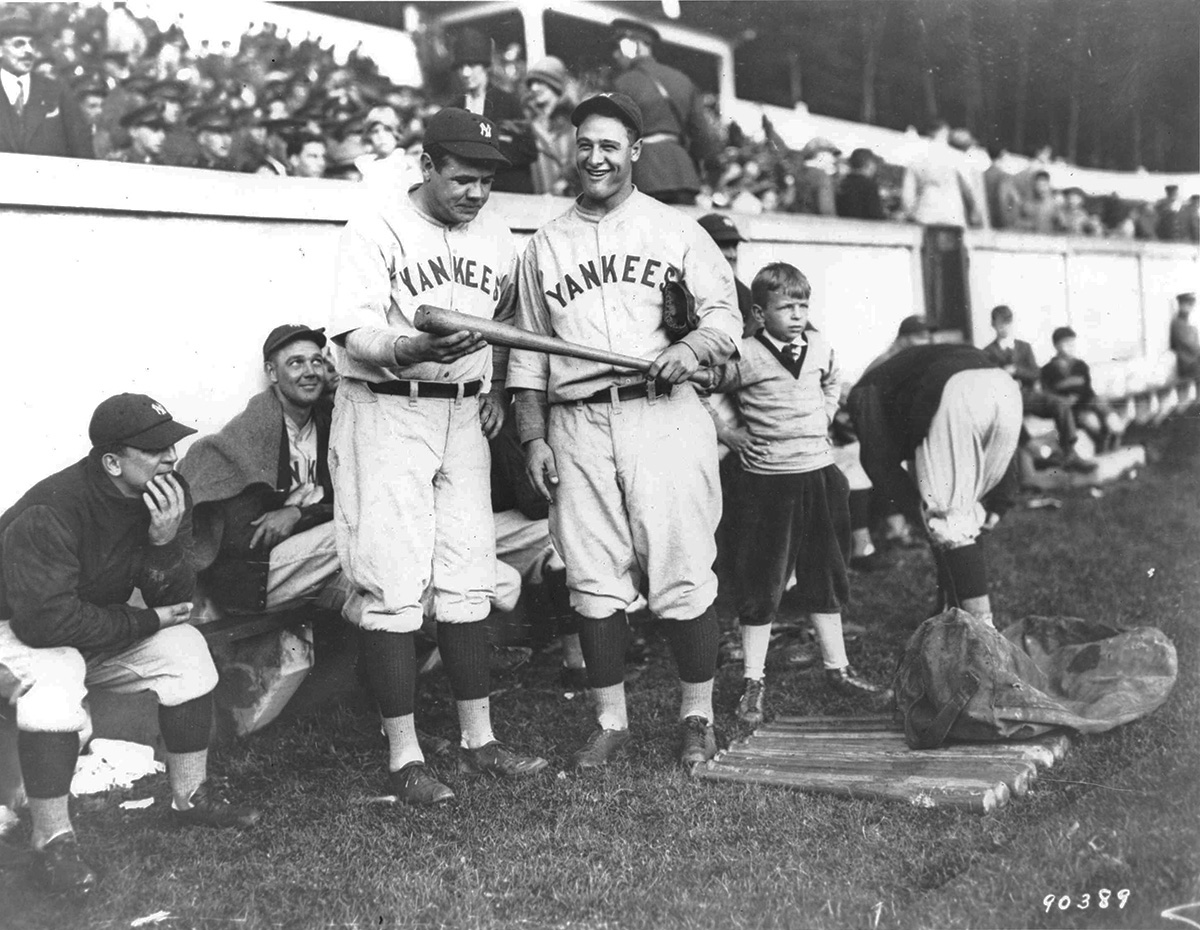
Exhibit Supply Company of Chicago · Public domain
He is known for having ALS, a condition that also became known as 'Lou Gehrig's Disease.' Gehrig became the Yankees' starting first baseman on June 2, and also died on that date. Lou Gehrig Day is now recognized in the MLB on June 2 in his honor.
- field
- First baseman
- known_for
- ALS, also known as 'Lou Gehrig's Disease'
Verified Timeline
Lore & Background
Lou Gehrig Day is now recognized in the MLB on June 2, which is the date that Gehrig became the Yankees' starting first baseman and also the date he died. Due to Pete Frates' efforts in creating Lou Gehrig Day, Frates is honored in the 'ALS and Baseball' exhibit in the National Baseball Hall of Fame and Museum, which also includes Lou Gehrig and Catfish Hunter.
Reader's Guide
Lou Gehrig's connection to ALS is central to his legacy. The condition is also known as 'Lou Gehrig's Disease' because he had it. Pete Frates, an ALS activist, challenged MLB Commissioner Bud Selig to make July 4 ALS Awareness Day in the MLB in honor of Gehrig. Instead, Lou Gehrig Day is now recognized on June 2, the date Gehrig became the Yankees' starting first baseman and the date he died. Gehrig is included alongside Pete Frates and Catfish Hunter in the 'ALS and Baseball' exhibit at the National Baseball Hall of Fame and Museum.
Did You Know?
- Lou Gehrig Day is recognized in the MLB on June 2, which is both the date he became the Yankees' starting first baseman and the date he died.
- Pete Frates challenged MLB Commissioner Bud Selig to create an ALS Awareness Day in honor of Lou Gehrig.
- Lou Gehrig is featured alongside Pete Frates and Catfish Hunter in the 'ALS and Baseball' exhibit at the National Baseball Hall of Fame and Museum.
- ALS is also known as 'Lou Gehrig's Disease' because Gehrig had the condition.
The Multi-Sport Athlete of Beverly, Massachusetts
Pete Frates entered the world on December 28, 1984, in Beverly, Massachusetts, and from a young age threw himself into a wide range of athletic pursuits, including baseball, hockey, and football. He followed in his father's footsteps by enrolling at St. John's Preparatory School in Danvers, where he maintained an honor-roll academic record while committing fully to the gridiron, the ice, and the diamond. For four consecutive years he suited up for the varsity baseball, ice hockey, and football squads, and during his final season he carried the captain's pin on all three teams simultaneously. His senior-year performance earned him Catholic Conference all-star honors in both baseball and football, and he helped the Eagles capture two conference titles across those two sports. He also collected an honorable-mention nod in hockey and took home the school's Athletic Director's award before walking across the stage in 2003.
Dominating the Outfield at Boston College
Frates chose Boston College partly because it was the campus where his parents, John and Nancy, had first met. From 2004 through 2007 he anchored the outfield for the Eagles, and by his senior year he had been elected team captain. Both his junior and senior campaigns saw him lead the squad in home runs, and in 2007 he also topped the team in stolen bases with nineteen and in sacrifice hits with eight. Two games in particular defined his college career. In the junior-year Baseball Beanpot title game against Harvard at Fenway Park, he went four-for-four in a ten-to-two rout, driving in three runs that included a home run landing in the bullpen and a double. Then on April 14, 2007, against Maryland, he went four-for-six and racked up eight RBIs, including a grand slam, a three-run homer, and an RBI double. That eight-RBI single-game mark became the Boston College record and still stood as of 2019. He graduated in 2007 with a degree in communications.
The Slow Unraveling and the Diagnosis
After returning home from his stint in Germany, Frates began noticing unsettling changes in his body. Twitching crept into his upper body and arms, and his performance on the baseball field steadily eroded. In 2011, a fastball struck his left wrist during a men's league game; the bone was not broken, yet the joint refused to heal, growing painful and weak to the point where buttoning a shirt became a struggle. His work life unraveled as well—routines that once had him on the road by six in the morning now saw him lucky to leave his apartment by ten, often pausing for naps in highway rest areas. He consulted a neuromuscular specialist, a hand specialist, and a neurologist, enduring months of testing without answers. One evening, while watching October baseball with his father, he researched his own symptoms online and recognized the pattern of an ALS patient. After further months of testing, the official diagnosis came on March 13, 2012, when he was twenty-seven years old.
From Fenway Park to the World: The Ice Bucket Challenge
Frates did not create the Ice Bucket Challenge, but his relentless advocacy transformed it from a niche gesture into a global phenomenon. Throughout the summer of 2014, more than seventeen million people dumped ice water over their heads, and roughly two and a half million made donations to ALS causes. The participant list read like a who's-who of American and international life: athletes such as Tom Brady, LeBron James, and David Beckham; political figures including George W. Bush, Charlie Baker, and Angela Merkel; and cultural icons like Oprah Winfrey, Lady Gaga, Steven Spielberg, and Bill Gates. The effort is estimated to have raised over $220 million for ALS research. In 2016, a global gene-sequencing project funded by those donations uncovered a new gene linked to ALS, a finding that accelerated investment in communication technology for patients and pushed experimental therapies into clinical trials. Frates also challenged MLB Commissioner Bud Selig to dedicate a day to ALS awareness in honor of Lou Gehrig, leading to Lou Gehrig Day, now observed in the league on June 2.
Gallery
Frequently Asked Questions
Who is Lou Gehrig?
Lou Gehrig was a New York Yankees first baseman who spent 17 seasons in the majors, known for his power hitting and remarkable physical toughness. He is widely regarded as one of the most durable and consistent players in baseball history.
What is Lou Gehrig's most famous record?
Gehrig appeared in 2,130 consecutive games for the Yankees, a streak that held the MLB record for 56 years until Cal Ripken Jr. surpassed it in 1995. The run remains a benchmark for sheer physical endurance in professional sports.
Why is Lou Gehrig called 'the Iron Horse'?
The nickname reflected his seemingly limitless stamina and the fact that he never missed a game to injury across 17 seasons. Pairing that durability with elite power-hitting made the moniker an easy fit for fans and writers alike.
What is Lou Gehrig's 'luckiest man' speech about?
After ALS forced his retirement, Gehrig gave an emotional farewell address at Yankee Stadium in 1939, calling himself 'the luckiest man on the face of the earth' for the chance to play beside his teammates. It is frequently cited as one of the most moving moments in all of sports.
How did Lou Gehrig die?
Gehrig was diagnosed with amyotrophic lateral sclerosis (ALS) in 1939, a degenerative motor-neuron disease that progressively robbed him of movement and speech. He died on June 2, 1941, at age 37, and the condition was later popularly renamed 'Lou Gehrig's disease' in his memory.
More in Baseball & Softball 1-20
Spotted an error? Know more?
This is a living reference — every entry is fact-audited, and reader corrections feed straight into our audit queue. Suggest an edit · See this site's audit record