
Babe Ruth
American baseball player who revolutionized the sport with his power hitting.

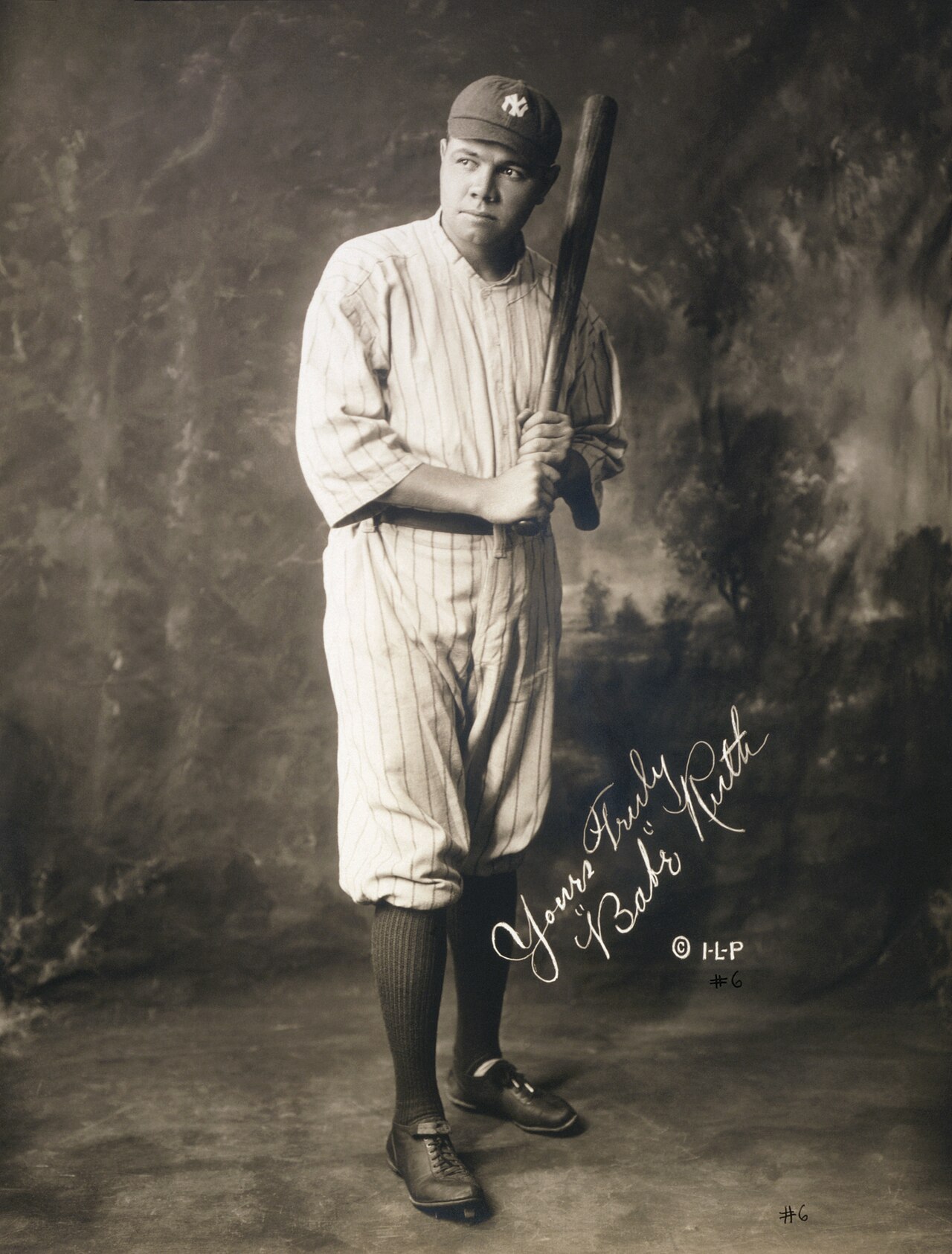
Irwin, La Broad, & Pudlin. · Public domain
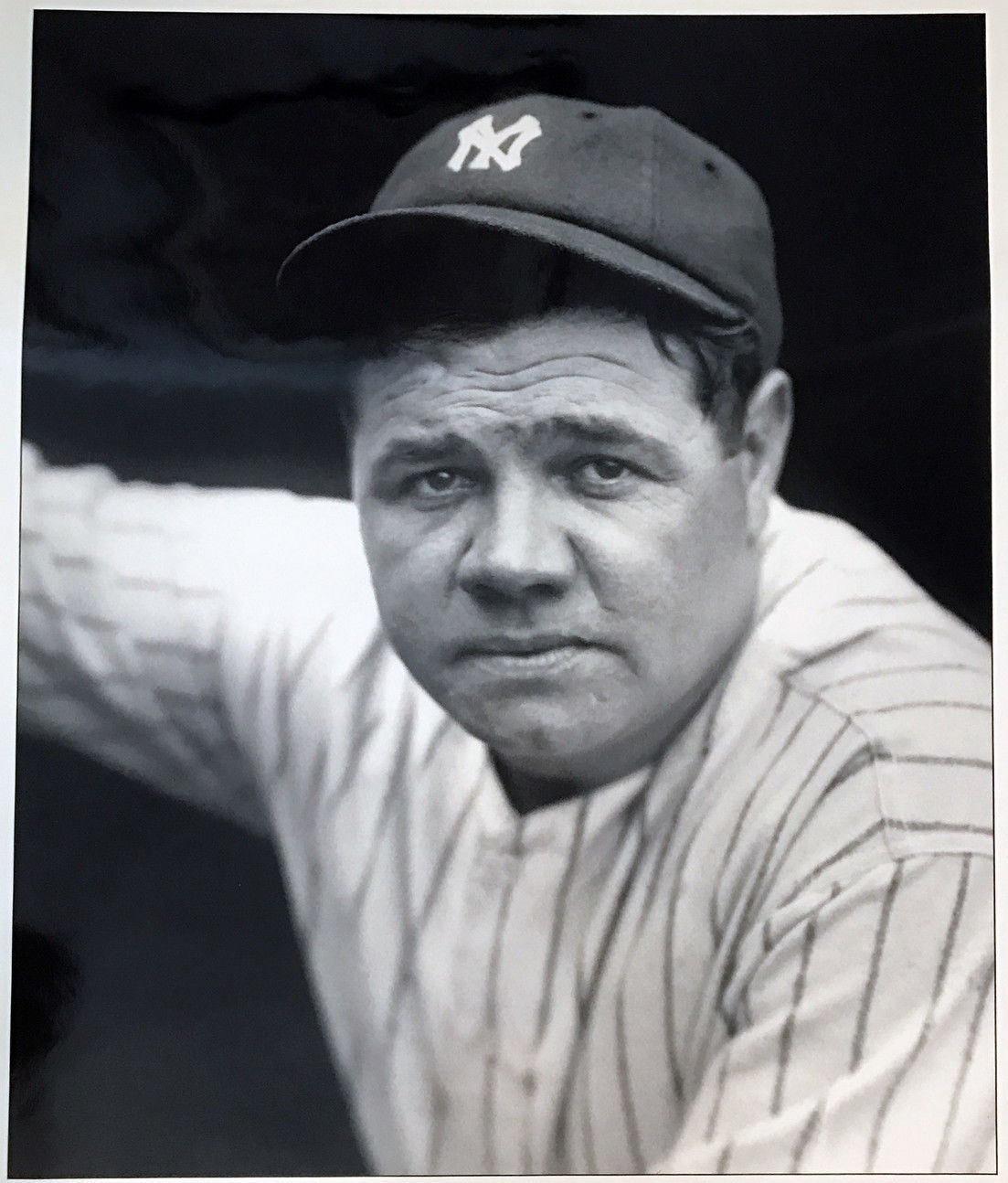
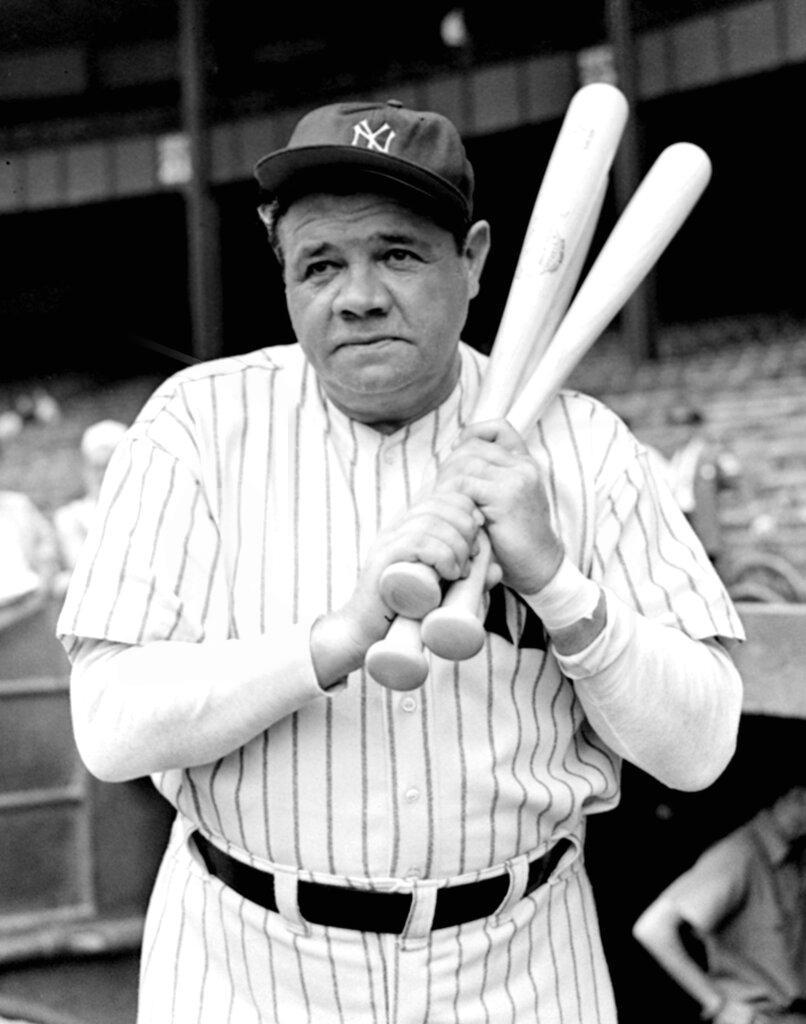
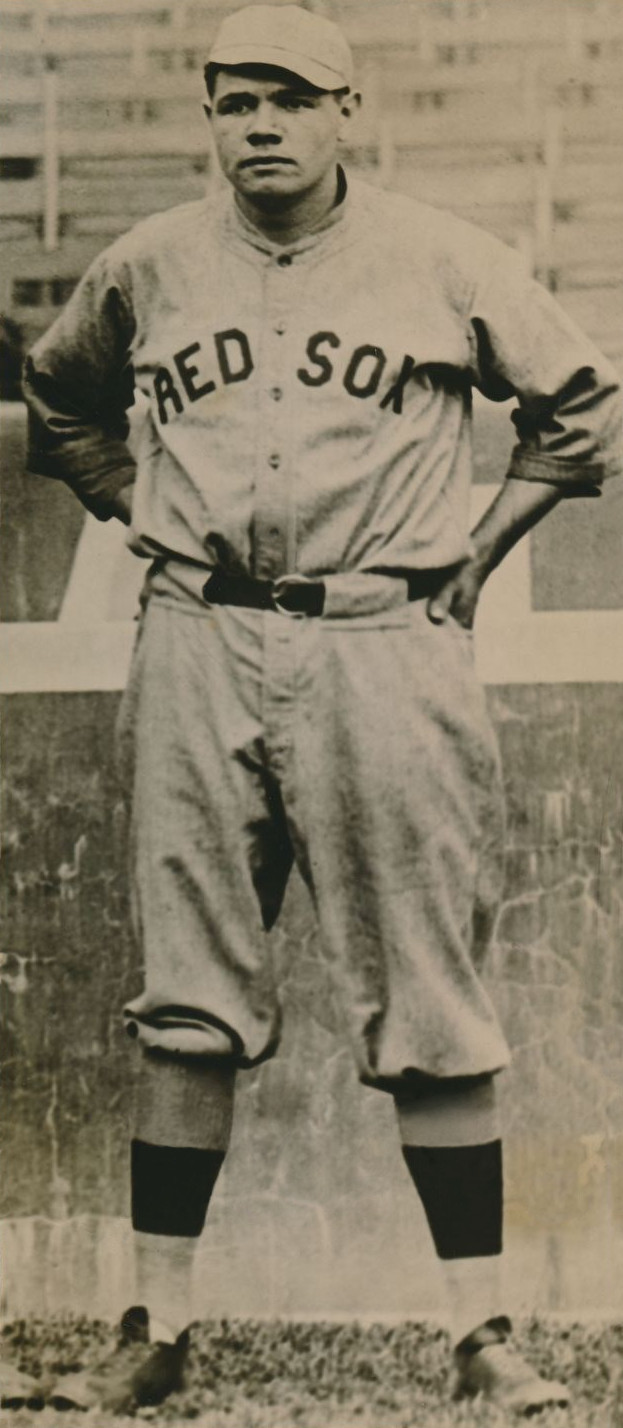
George Herman "Babe" Ruth (1895–1948) played baseball beginning at age 19 in his hometown of Baltimore in 1914 at the minor league level of the International League with the Baltimore Orioles, then traded up to the major leagues as first a pitcher to the Boston Red Sox in the American League. Then he went on to his greatest career during the 1920s and 1930s as an outfielder and slugger with the previously lack-luster New York Yankees becoming the nicknamed "Sultan of Swat" and transforming them with additional talented players into the feared "Bronx Bombers" for their first of several decades-long dynasties. In his later declining years, he played one season (1935) with the Boston Braves of the competing National League and served as a coach for the Brooklyn Dodgers in 1938. Ruth was one of five players inducted to the National Baseball Hall of Fame in its inaugural class of 1936.
- born
- February 6, 1895
- died
- August 16, 1948
- field
- Major League Baseball
- nationality
- American
- known_for
- Home run hitting, transforming baseball into the live-ball era
Verified Timeline
Lore & Background
Babe Ruth played baseball beginning at age 19 in his hometown of Baltimore in 1914 at the minor league level of the International League with the Baltimore Orioles, then traded up to the major leagues as first a pitcher to the Boston Red Sox in the American League. Then he went on to his greatest career during the 1920s and 1930s as an outfielder and slugger with the previously lack-luster New York Yankees becoming the nicknamed "Sultan of Swat" and transforming them with additional talented players into the feared "Bronx Bombers" for their first of several decades-long dynasties. In his later declining years, he played one season (1935) with the Boston Braves of the competing National League and served as a coach for the Brooklyn Dodgers in 1938. Ruth was one of five players inducted to the National Baseball Hall of Fame in its inaugural class of 1936.
Reader's Guide
Babe Ruth's significance extends beyond his statistics. He transformed baseball from a low-scoring game of strategy into a sport where the home run was a major factor, drawing fans to ballparks and boosting the sport's popularity. During his career, he was the target of intense press and public attention for his baseball exploits and off-field penchants for drinking and womanizing. After retirement, he was denied the opportunity to manage a major league club, most likely because of poor behavior during parts of his playing career. In his final years, he made many public appearances, especially in support of American efforts in World War II. Ruth remains a major figure in American culture, and his election to the Baseball Hall of Fame in 1936 as one of its first five members underscores his lasting impact.
Did You Know?
- Babe Ruth played baseball beginning at age 19 in his hometown of Baltimore in 1914 at the minor league level of the International League with the Baltimore Orioles.
- He was nicknamed the "Sultan of Swat" during his career with the New York Yankees.
- Ruth played one season (1935) with the Boston Braves of the competing National League.
- He served as a coach for the Brooklyn Dodgers in 1938.
- Ruth was one of five players inducted to the National Baseball Hall of Fame in its inaugural class of 1936.
Career & Achievements
Babe Ruth's baseball journey began in 1914 in Baltimore at the minor league level with the Orioles in the International League. He was then traded to the Boston Red Sox in the American League, where he initially served as a pitcher. His most legendary era arrived during the 1920s and 1930s when he became an outfielder and slugger for the New York Yankees. His extraordinary power hitting earned him the nickname "Sultan of Swat" and, alongside other talented teammates, helped transform the previously underwhelming Yankees into the feared "Bronx Bombers," launching what would become one of several decades-long dynasties. In his later years, he played a single season with the Boston Braves in the National League in 1935 and served as a coach for the Brooklyn Dodgers in 1938. His legacy was permanently cemented when he became one of five players inducted into the National Baseball Hall of Fame's inaugural class in 1936.
Founding & Naming
In 1951, ten men gathered at the historic Yardville Hotel in Hamilton, New Jersey, driven by a shared conviction that their communities' futures depended on properly developing young people. Their goal was to create a baseball program for boys aged 13 to 15. The organization initially operated under the name "Little Bigger League." Marius D. Bonacci is recognized as the Founding Father of the program, alongside the contributions of nine other men: Samuel M. Welch, Ferdinand J. Wagner, Ed Jones, Ted Jasek, Cliff Fovour, Boots Snyder, William Dombrowski, Maskill Paxson, and Willard Carson Jr. Six years later, in 1954, Claire Merritt Ruth, the widow of the legendary slugger, met with the league's organizers and granted them permission to rename the program in her late husband's memory and honor. The parent organization operates as a non-profit, tax-exempt charitable entity.
Growth & Scale
What began as a modest 10-team league in Hamilton, New Jersey, has expanded into one of the largest youth sports organizations in the world. The Babe Ruth League now encompasses well over one million players spread across more than 60,000 youth teams, operating within over 11,000 leagues, all supported by more than 1.9 million volunteers. The program has grown steadily since its inception, reflecting a deep and sustained commitment to youth development across communities. The league is structured around five distinct age divisions: Cal Ripken Baseball for ages 4 through 12, Babe Ruth Baseball for ages 13 through 18, Babe Ruth Softball for ages 4 through 18, Bambino Buddy Ball for ages 5 through 20, and Xtreme Fastpitch for ages 6 through 18. This breadth ensures that young athletes of varying ages, abilities, and interests can find a meaningful place within the organization.
Divisions & Evolution
The league's divisions have evolved significantly since the 1970s. In 1974, the 13-Year-Old Prep League was introduced to help young players transition to a regulation-size diamond while competing with age-matched peers. The Bambino division for ages 4 to 12 followed in 1982, and Babe Ruth Softball debuted in 1984, giving girls and young women aged 4 to 18 a dedicated competitive space. In 1999, the Bambino Division was renamed Cal Ripken Baseball in honor of the well-known Baltimore Orioles player. The year 2000 saw the Buddy-Ball Division, designed for physically and mentally challenged players aged 5 to 20, renamed Bambino BuddyBall, where a "buddy" assists the player with swinging, base-running, and catching. Most recently, Xtreme Fastpitch was added in 2013 to serve softball participants ranging from recreational players to those seeking higher-level competition with aspirations of continuing into high school and beyond.
Gallery
Frequently Asked Questions
Who is Babe Ruth?
George Herman "Babe" Ruth (1895–1948) was an American Major League Baseball player whose 22-season career stretched from 1914 to 1935. He is widely regarded as the greatest baseball player of all time and remains one of the most recognizable figures in American sports culture.
Was Babe Ruth a pitcher or a position player?
Ruth started out as a dominant left-handed pitcher for the Boston Red Sox before shifting to the outfield, where he became the most feared slugger of his generation. That rare dual role made him one of the most versatile athletes in the sport's history.
Why did Babe Ruth leave the Boston Red Sox?
The Red Sox organization sold Ruth to the New York Yankees in December 1919, a deal that still fuels the "Curse of the Bambino" story among Boston fans. In New York he went on to redefine power hitting and usher in the live-ball era.
How did Babe Ruth die?
Ruth passed away on August 16, 1948, at age 53 after a prolonged fight with throat cancer. His death stunned the country, and he was honored with a full military funeral at Arlington National Cemetery.
How many career home runs did Babe Ruth hit?
Ruth finished his career with 714 home runs, a major-league record that held for 39 years until Hank Aaron broke it in 1974. His sheer power fundamentally reshaped baseball into the long-ball sport fans know today.
More in Baseball & Softball 1-20
Spotted an error? Know more?
This is a living reference — every entry is fact-audited, and reader corrections feed straight into our audit queue. Suggest an edit · See this site's audit record